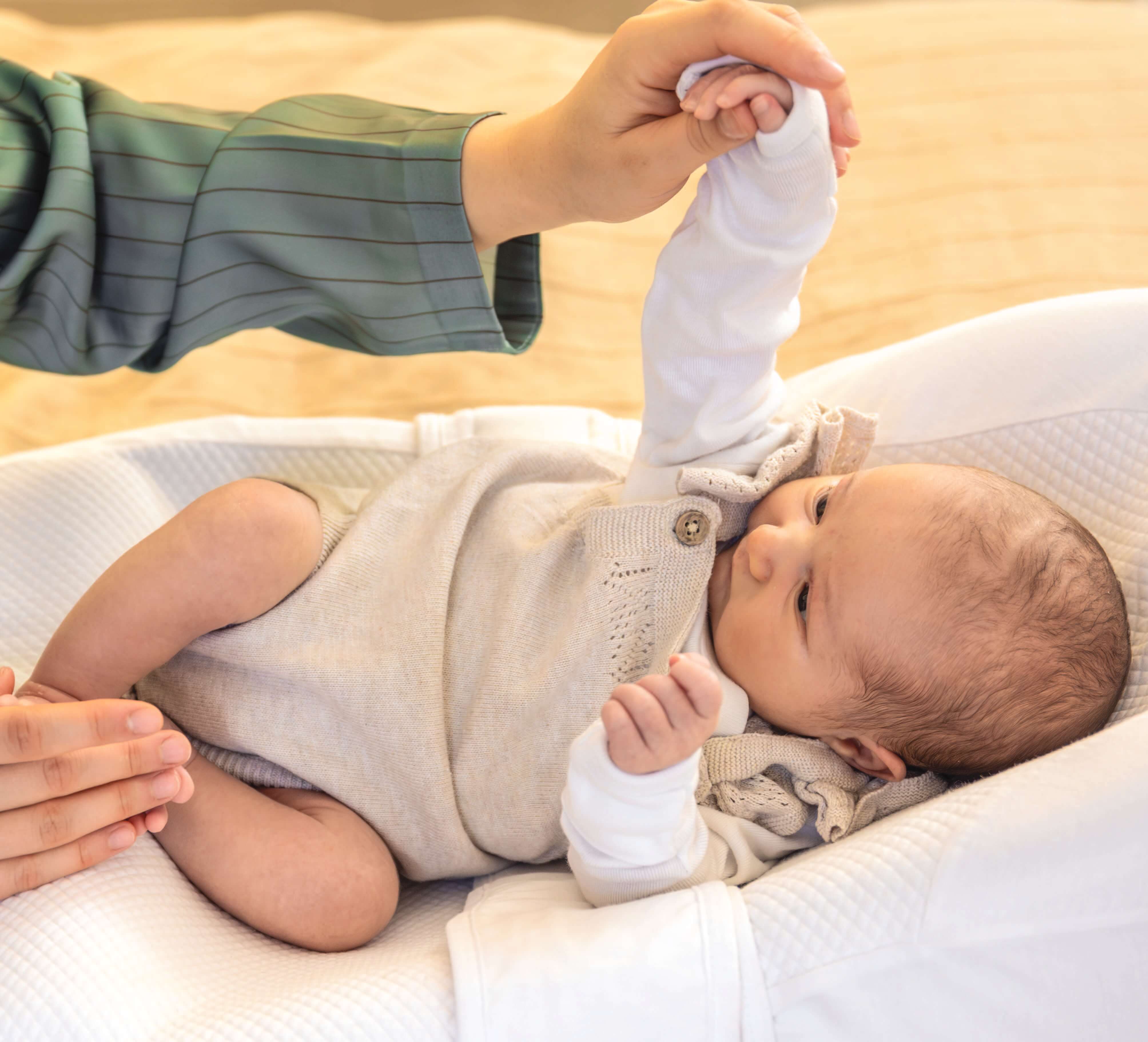
Falls are the leading cause of emergency room visits for injuries. Falls can cause more cuts, fractures, and brain injuries than many other causes. Most falls happen at home. There are specific preventative measures you can take to protect your newborn from falls.
Remember the safety principle:
- Only Safe Surfaces: Place your baby on a firm, flat surface.
- Constant Supervision: Never leave your baby alone on a crib, in a bassinet with side rails down, or on a changing table.
- Ask for Family Support: Ask for help if you feel sleepy or tired – babies can slip from tired arms.
- Sleep Environment Matters: Provide a safe sleep environment with a crib that has a basket or side rails, remove clutter and dangerous obstacles from the floor, and never place your baby on a sofa, chair, or adult bed.
Safety guidelines and warnings:
- Always keep one hand on your baby while changing diapers or reaching for supplies.
- Use a crib with side rails for sleeping, and avoid adult beds, sofas, or chairs.
- Never place car seats or baby carriers on tables, chairs, or beds. Place these items on the floor, not on furniture.
- Avoid carrying your baby in these devices when going up or down stairs.
- Avoid multitasking while holding your baby. Hold them with both hands, supporting their head and neck.
- Falls often occur when parents are distracted, tired, or in a hurry.
- Keep blankets, pillows, and toys away from the sleeping area.
- Avoid carrying hot drinks, sharp objects, or using a mobile phone while holding or near your baby.
- When bathing your baby, always use a clean, non-slip baby bathtub placed on a firm, flat surface. Remember that babies slip when wet, so hold your baby firmly and gently at all times.
- Do not allow young children to hold or play with the baby. Always supervise other children closely around the infant to prevent rough handling or accidental falls.
Together, we can protect your baby from fall.
Your baby's safety starts at home!
What steps to take if your newborn falls at home?
- Stay calm and check your baby.
- Pick up your baby gently if needed.
- Do not shake your baby or make sudden movements.
- Check your baby's responsiveness.
- Crying is a positive sign (meaning the baby is responding).
- Look for visible injuries.
- Bleeding, swelling, or bruising on the head or body.
- Cut injuries.
- An arm or leg that appears twisted or is not moving normally (this could be a fracture).
- Watch for danger signs.
Call emergency services or go to the emergency room immediately if your newborn shows any of these symptoms:- Loss of consciousness (fainting).
- Seizures or abnormal jerking movements.
- Frequent vomiting.
- Extreme lethargy and difficulty waking up.
- Refusal to feed or poor feeding.
- Breathing difficulties, or extreme blueness or paleness.
- Uncontrollable, continuous crying that cannot be calmed down.
- Obvious deformity of the arms/ legs or refusal to move a limb.
- Bulging fontanelle (soft spot on the head).
- Abnormal eye movements.
If there are no signs of danger:
- Monitor your baby closely for the next 24 hours.
- Keep your baby in the same room with parents.
- Continue normal breastfeeding and ensure your baby is alert when awake.
- Regularly check the head and body for swelling, bruising, or behavioral changes.
- Do not give any medication unless prescribed by a doctor.
When to go to doctor clinic (even if your baby look fine):
- If the fall was from a height (e.g., a bed, a table, or a caregiver's arms).
- If your baby fell on a hard surface (tiles, concrete).
- If you are worried or uncertain, it is always best to have your baby examined.
Fall Prevention Guidelines for Mothers after Delivery
Why you may be at risk?
- Feeling weak, dizzy, or fatigued after delivery or anesthesia.
- Pain or discomfort affecting balance and mobility.
- Taking pain relievers, blood pressure medication, or sedatives.
- Getting up for the first time after delivery or surgery (especially a cesarean section).
- Carrying your baby while moving around.
- Slippery floors, clutter, or poor lighting.
How to Prevent Falls?
In the hospital
- Ask for help when getting out of bed for the first time after delivery or surgery.
- "Call before you fall." Always use the call bell if you feel weak, dizzy, or unsteady.
- Wear non-slip socks or shoes provided by the hospital.
- Use handrails in restrooms and hallways.
- Do not carry your baby while walking immediately after delivery, ask medical staff or a family member for help.
- Keep the area clear of obstacles.
- Take your time when getting up from a bed or chair. Sit down first, then stand up slowly.
At home
- Make sure hallways are well-lit and clear of obstructions.
- Keep frequently used items (nappies, baby supplies) within easy reach to avoid stretching or bending over.
- Avoid wet or slippery floors.
- Wear flat, sturdy shoes (avoid high heels, flip-flops, or walking barefoot).
- Ask for help when bathing your baby or going up/down stairs.
If you feel weak, dizzy, or if you fall:
- Sit or lie down immediately to avoid injury.
- Ask a nurse or family member for help, or use the emergency bell/phone.
- If you fall, don't try to get up quickly. Roll onto your side first, then stand up slowly using stable furniture.
- Tell your nurse or doctor immediately, even if you feel well.
Special advice for mothers after a cesarean section:
- Use support when standing (a bed rail or a family member).
- Avoid sudden twisting or bending movements.
- Support the incision area when moving or coughing.
- Do not lift heavy weights (except your baby) until your doctor allows you to.
Remember
Preventing falls protects both you and your baby. Never hesitate to ask for help.