By clicking “Accept All”, you agree to the storing of cookies on your device to enhance site navigation, analyze site usage, and assist in our marketing efforts.
The use of tobacco products is a major preventable risk factor, posing significant risks to human health and life.
Tobacco results in the death of more than 8 million people a year. More than 7 million of those deaths are the result of direct tobacco use while around 1.2 million are the result of non-smokers being exposed to second-hand smoke (Indirect exposure to smoking, such as sitting with smokers).
In 2020, tobacco users amounted to 22.3% of the world's population; 36.7% of men and 7.8% of women from around the world.
Tobacco usage incurs significant economic costs, including healthcare expenses for treating tobacco-related diseases and loss of human capital due to mortality. [World Health Organization]
Tobacco components
Tobacco smoke is made up of more than 7,000 chemicals, many of which are considered carcinogens:
Carbon monoxide, which reduces the efficiency of blood in transferring oxygen to cells.
Nicotine, known to cause narrowing of arteries and addiction.
Tar, a contributor to lung cancer and pulmonary embolism. (Centers for Disease Control and Prevention)
Forms of Tobacco Use
Cigarettes, cigars, e-cigarettes, hookahs, vapes, and more.
Although electronic cigarette aerosol generally contains fewer harmful chemicals than smoke from burned tobacco products, it still poses a risk factor for future use of burned tobacco cigarettes, as well as carrying a risk of explosion.
While smoking a hookah (Shisha) for an hour is approximately equivalent to smoking 200 cigarettes (Centers for Disease Control and Prevention)
Dangers of Smoking:
It is a well-known fact that smoking harms human physical, mental, and financial health, as well as the health of those around them who inhale cigarette smoke (secondhand smoke).
Most smokers are aware of this fact; however, they basically need help to overcome this detrimental habit, overcome the intense desire to smoke and control their withdrawal symptoms.
Cardiovascular diseases.
Respiratory diseases.
Cancers.
Diabetes.
Infections.
Osteoporosis.
Genital disorders.
Intestinal ulcer disease.
Periodontal disease.
Eye disorders.
Post-operative complications.
Rheumatoid arthritis.
Others.
Tobacco and Pregnancy
Smoking during pregnancy causes major problems, including preterm delivery and some birth defects, and it may lead to abortion.
Smoking can lead to abortion.
Smoking can lead to placental problems.
Smoking during pregnancy and after pregnancy can lead to Sudden Infant Death Syndrome (SIDS).
Congenital defects, such as cleft lip or palate.
Secondhand Smoke and its impact on maternal and child health
Pregnant women who are exposed to smoking are more likely to give birth to a low-weight child.
Children who are more exposed to smoking are more likely to ear infections and asthma attacks.
Children who are exposed to smoking are more likely to die from sudden infant death syndrome.
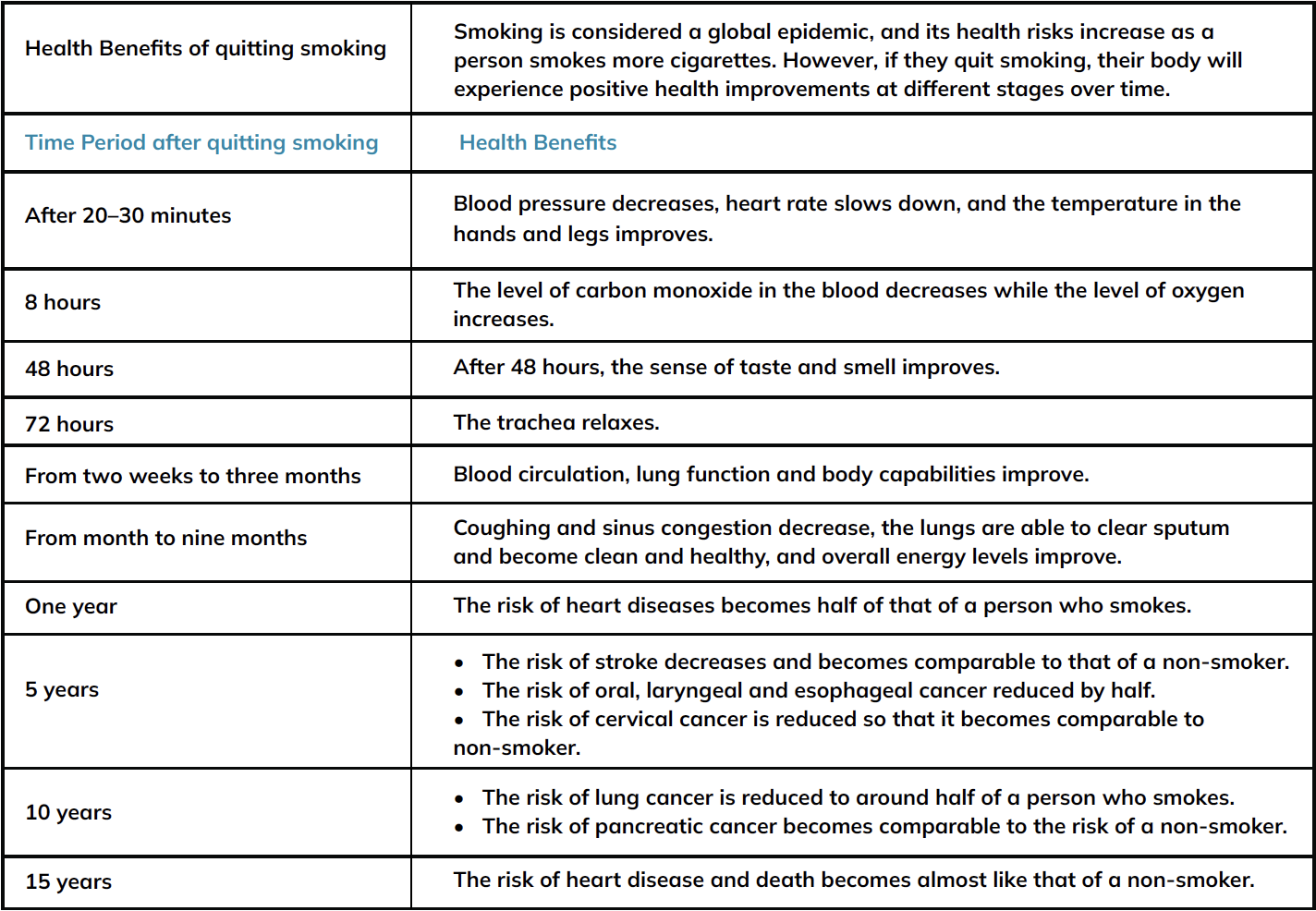
Benefits of Quitting Smoking
5 Steps to Quit Smoking
Get ready.
Get support.
Learn to exercise new skills and behaviors.
Take and properly use the medications.
Be prepared for relapses.
1. Get Ready:
Set a date for quitting smoking.
Change your environment [get rid of all cigarettes and ashtrays in your home, vehicles and workplace and do not allow people to smoke in your home].
Review your previous attempts to quit smoking, think about what you have done and what you haven't.
Once you quit, do not smoke, not even a puff.
2. Get support and encouragement:
Tell your family, friends and co-workers and ask them not to smoke around you.
Follow up with the health care provider.
3. Learn new skills and behaviours:
When you first try to quit smoking, try to change your routine [for example, drink tea instead of coffee, go for a walk and exercise, drink plenty of water and fluids, take a hot bath, and read a book].
4. Get the Medications:
The United State for Food and Drug Administration has approved a set of medications that help quit smoking.
Bupropion.
Gum.
Lozenges.
Skin patches.
Nasal nicotine spray.
Nicotine oral inhaler.
Varenicline.
5. Be prepared for relapse:
Most relapses and returns to smoking occur within the first three months. Among the things you may face are: