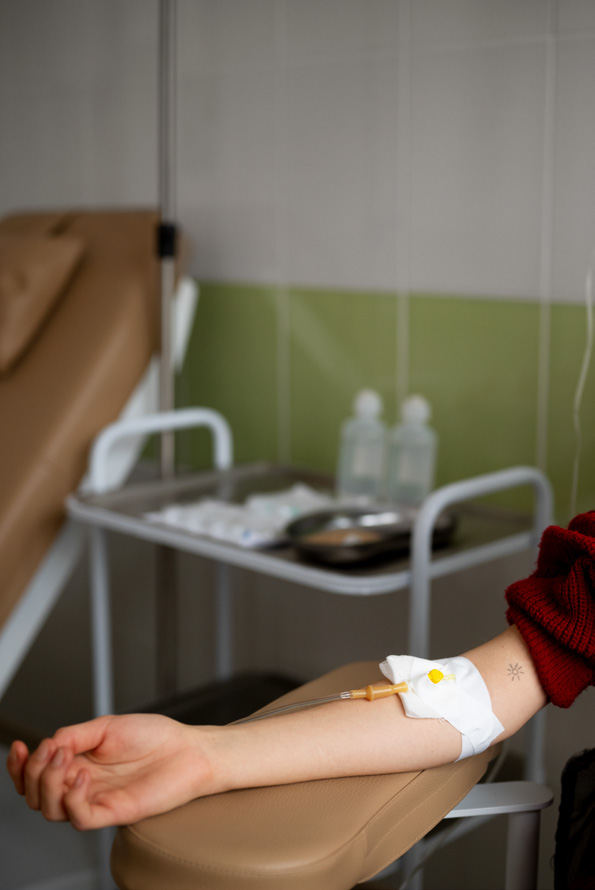
What is chemotherapy?
It is a treatment that kills cancer cells. This treatment unfortunately cannot differentiate between cancer cells and normal cells; killing all of them, especially those located inside the mouth, stomach lining, and hair follicles. In all cases those normal cells are able to survive and return to its nature form, while the cancer cells die.
The most important points patients undergoing chemotherapy should know:
Medications:
- Anti-nausea drugs must be taken as prescribed by the doctor in order to reduce nausea and vomiting.
- Painkillers should be taken before eating, especially if there are ulcers in the mouth so that the patient can eat.
- A mouth gargle can be used to soothe the pain of ulcers.
- Taking vitamins/iron that supports the patient immunity.
- The use of specific vitamin injections as prescribed by the doctor.
Dietary guidelines:
- The patient should eat meals high in protein and calories such as; (fish, chicken and red meat).
- Eat low-fat salted biscuits to get rid of nausea.
- Eat cooked green leaves and red fruits (beetroot and pomegranate) to enhance the iron level in the blood.
Activity and movement:
- Alternate time of rest with time of movement to conserve energy and avoid bedsores.
- If the patient is working in an office, please get up and move around every hour.
- If the patient is working in the field, the patient should take a rest every hour.
Nausea and vomiting:
- Eating more salted biscuits or sour sweets throughout the day.
- Eat a cold or room-temperature meal instead of a hot meal that may cause nausea.
- Avoid fatty and sugary foods with strong odors that may increase nausea.
- Keep the patient away from strong odors.
- In case of vomiting, it is preferable to avoid eating any food for a period of time.
Anorexia:
- Avoid drinking liquids before eating because they fill your stomach.
- Share a meal with another person.
- Diversifying lunch and adding sauces or butter to improve the taste.
Mouth ulcers:
- Examination of the patient's mouth to detect mouth ulcers that may start from (12-7) days after starting chemotherapy.
- Using a soft toothbrush.
- Avoiding sour, burning or solid food to relieve the pain associated with ulcers.
- Food should be served wet and easy to chew.
- Tell your doctor about any symptoms such as (white, dry or brown spots, yellow areas, or any open wounds inside the mouth or lips).
Infection and Inflammation:
- Eating healthy, balanced meals that contain vitamins and minerals. Drink plenty of fluids and take enough rest while avoid stress and pressure as much as possible.
- Keeping the mouth, teeth and gums clean by using a soft toothbrush.
- Washing your hands often with soap and water, especially before eating or after using the bathroom.
- Cleaning of sensitive areas by shaving them (armpits or pubic area) to avoid the development of fungal infections.
- Avoid contact with sick people or being in crowded places.
- Avoid eating raw fruits or vegetables, eggs or unpasteurized milk.
Call your doctor immediately if:
- There is an increase in temperature more than 38.5.
- There is redness, swelling, or pain around any wound.
- There is a cough, congestion of tonsils and nose, or there is a cold.
- There is a feeling of burning during urination or polyuria.
- There are white inflammatory sores in the mouth.
Bleeding:
- Avoid the physical activities that may cause injuries.
- Upon exposure to injury, you must press on the injured area for 10-5 minutes to stop the bleeding.
- Avoid using hard toothbrush that causes bleeding gums, and use special sponge toothbrush.
- Do not use dental floss.
- Keep your lips moisturized by using lip balm.
- Do not undergo any dental treatments without consulting your physician.
- Use laxatives and drink plenty of fluids to avoid constipation.
- Do not use aspirin or anticoagulant treatment without a doctor's prescription.
- Avoid measuring the temperature through the anus, as it may increase the risk of bleeding.
- It is preferable to do your lab tests regularly.
- You should see your doctor if you have any symptoms or signs of bleeding, such as unjustified or sudden bruises or change the color of your stool to very dark color, or there is blood in your urine or stool.
Anemia:
- Do all your activities while taking breaks.
- Take vitamins and iron supplement to elevate the level of hemoglobin in the blood.
- Eat cooked green leaves, red meat or red fruits.
Call your doctor immediately if:
- Paleness and yellowish of skin .
- Vertigo.
- Tinnitus of ears.
- Shortness of breath.
- Dizzeness.
Diabetes and chronic diseases:
- Monitor your blood sugar levels using a home glucose monitors and write your readings into the reading booklet and take notes.
- Continue taking your medication, whether tablet or insulin and inform the doctor if you suffer from frequent low blood sugar or even highs.
- Monitor low blood sugar closely. When it occurs, you must eat simple sugar such as: (half a cup of juice, 3 dates, a spoon of honey) then repeat the test after 15 minutes.
- If it is still low, you should take the simple sugars again and repeat the test after 15 minutes.
- Measure your blood pressure continuously and tell your doctor if severe blood pressure dropping or rising happen.