By clicking “Accept All”, you agree to the storing of cookies on your device to enhance site navigation, analyze site usage, and assist in our marketing efforts.
Breast cancer is a disease that affects the breast tissue, in which normal breast cells transform into cancerous cells.
Some may think it is a single disease, but in fact, it includes multiple types of tumors that differ in symptoms and severity, and each type has its own treatment approach.
It is essential to understand that not every lump or abnormality in the breast is cancerous. Therefore, do not panic if you notice a change in the shape or texture of your breast, or if you detect a lump. Instead, promptly consult a family physician or a breast surgeon for a clinical examination.
The difference between benign and malignant tumors
Benign Tumor: A group of cells that grow slowly and in an organized way, it is not dangerous and not all cases require surgical removal; some limited cases may need surgical intervention after consulting with a specialist doctor, It can be removed easily and doesn't come back, and it is not spread it stays in one place and doesn’t invade other tissues, examples such as a uterine fibroid or a small lump under the skin.
Malignant Tumor (Cancerous): Cells that grow in an abnormal and often faster way and may affect nearby tissues, It can be dangerous, but it’s not the end , many effective treatments are available today, and yes it can spread to other parts of the body if not treated early, but… early detection and proper care greatly increase the chances of full recovery.
Not every tumor is something to be afraid of. Many people live healthy lives after dealing with a tumor whether benign or malignant. The most important thing is regular check-ups and not to panic.
Symptoms of Breast Cancer
Although breast cancer may not exhibit symptoms, particularly in its early stages, there are certain signs that could be present, such as:
The presence of a lump in the breast or armpit, with or without pain.
Nipple discharge.
Signs of breast inflammation that do not respond to antibiotics, as there is a type of breast cancer known as inflammatory breast cancer.
Risk Factors
A family history of breast cancer, particularly among first-degree relatives, especially if diagnosed before the age of fifty.
A personal history of breast cancer.
Smoking.
Alcohol consumption.
Obesity, especially after menopause.
Late onset of menopause.
Early onset of menstruation.
Advancing age.
Although breast cancer can occur in men, women are significantly more at risk.
Having the first child after the age of 35.
Never having been pregnant.
Hormone therapy for menopause without medical supervision.
Exposure to radiation therapy.
Diagnosis
Breast Examination: During a clinical breast examination, a healthcare provider examines the breasts for any abnormalities, which may include changes in skin texture or nipple appearance.
Mammography: This is commonly used for breast cancer screening and involves X-ray imaging of breast tissue, and research has confirmed it to be very safe and effective in detecting tumors in their early stages.
Breast Ultrasound.
Breast magnetic resonance imaging (MRI): May be needed in some cases.
Breast Biopsy: A biopsy involves taking a sample of breast tissue for laboratory examination. It is a safe procedure and does not cause the spread of the tumor or convert benign tumors into malignant ones.
Treatment
The treatment plan is developed under the supervision of a multidisciplinary medical team, including a breast surgeon, oncologist, and radiation oncologist, based on each individual case. Surgery is one of the treatment methods, and it may be accompanied by other therapeutic methods such as hormonal therapy, biological therapy, radiation therapy, and chemotherapy.
Does every breast cancer case require chemotherapy?
Absolutely not every breast cancer cases require chemotherapy. chomotherapy is one method of treating certain types of breast cancer, but it is not necessary for all cases.
Prevention
Things you can take to reduce your risk of breast cancer:
Inquire about breast cancer screening tests.
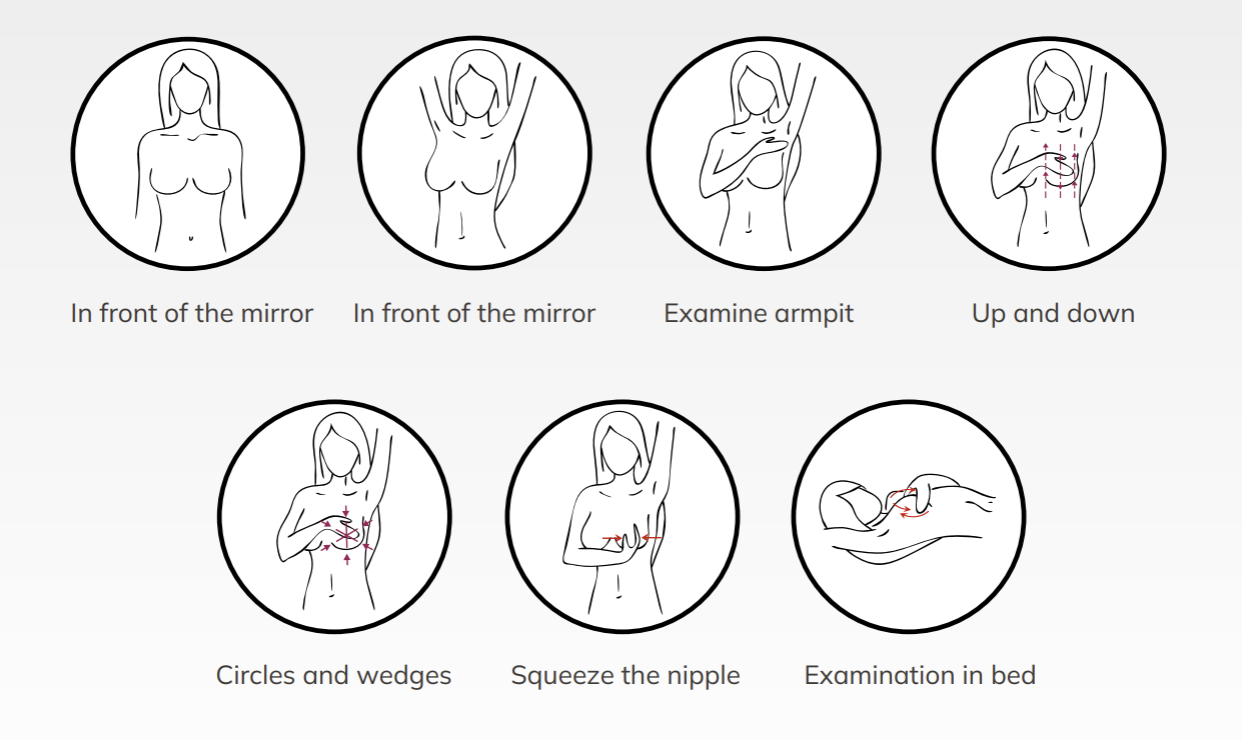
Learn about the normal state of your breasts through self-examinations to monitor any changes.
Engage in physical activity on most days of the week.
Avoid smoking.
Avoid alcohol consumption.
Maintain a healthy weight.
Do not take hormone replacement therapy without medical supervision.
Regular check-up are important, especially for women over the age of forty, but if there is a family history of the breast cancer, the check-up should be done ten years earlier than the age of the affected person.
Making lifestyle changes can help reduce the risk of developing breast cancer. Maintaining a healthy lifestyle lowers the probability of occurrence.
Self-examination for the breast
Coping and Support
Learn enough about breast cancer to make informed decisions about your care.
Talk to other breast cancer survivors.
Find someone to talk to about your feelings.
Keep your friends and family close.
Palliative Care: This is a type of medical care in which a team works with you, whith your family, and with your healthcare providers to help you feel better.
When to see a doctor
If you notice a new lump in your breast, or a change in breast size or shape, or any nipple discharge especially if it is bloody, consult your doctor, although these symptoms are often not concerning, a clinical examination is crucial to determine their nature.
Do not forget that every woman should have an annual visit to a specialized clinic after the age of 40, even in the absence of symptoms, to undergo early breast cancer screening.
Related Blogs
Early Detection Saves Lives: Understanding Cervical Cancer and the Importance of Screening